An unmetered dedicated server gives you exclusive physical hardware with network traffic that isn’t billed against a fixed monthly data-transfer allowance.
But unmetered doesn’t mean unlimited speed. Your network port, connection type, and hosting provider’s usage policies still determine how much bandwidth you can use.
Here’s what to check before choosing an unmetered hosting plan.
Key Takeaways
- Unmetered bandwidth means no fixed monthly data-transfer quota, subject to the plan’s terms.
- A 1Gbps port has a maximum link rate of 1Gbps, regardless of how much traffic your plan allows.
- Shared and dedicated network connections offer different levels of bandwidth availability.
- A 10Gbps server is worth considering when your application requires higher peak throughput.
What Does Unmetered Bandwidth Mean?
With metered hosting, your plan may include a fixed monthly allowance, such as 10TB or 30TB. Exceeding that allowance can result in overage charges or reduced service, depending on the provider.
An unmetered plan removes that fixed transfer quota. However, your traffic remains limited by the available network capacity and applicable service policies.
For example, a 1Gbps unmetered dedicated server can transfer substantial amounts of data throughout the month, but it cannot exceed the physical speed of its network connection.
Unmetered bandwidth and unlimited network speed are not the same thing.
If you’re new to dedicated hosting, our beginner’s guide to dedicated servers explains how physical servers work, their key benefits, and when dedicated hardware is a better choice than VPS hosting.
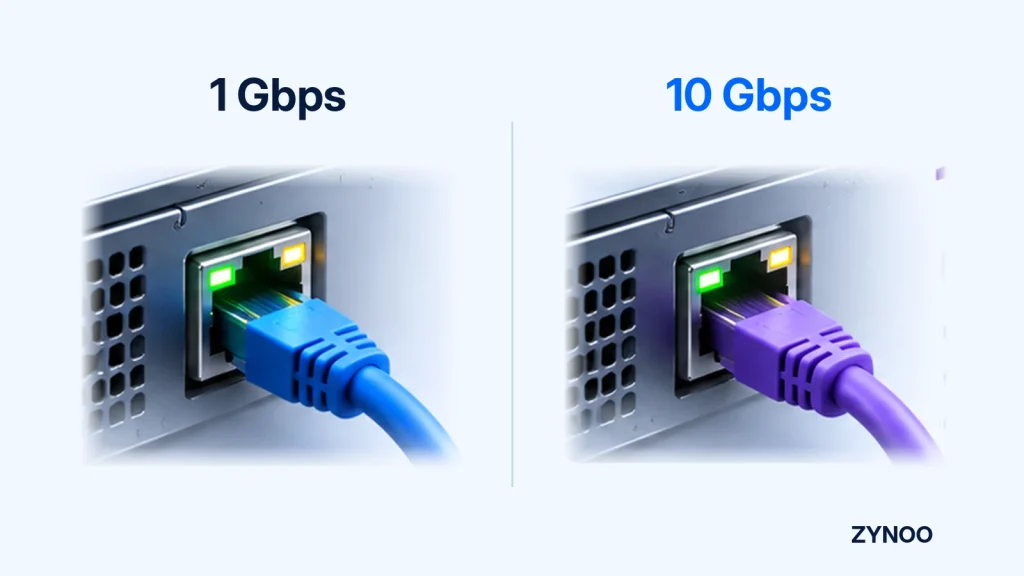
1Gbps vs 10Gbps Unmetered Dedicated Servers
Choosing the right port speed depends on your application’s peak bandwidth requirements.
| Feature | 1Gbps Unmetered | 10Gbps Unmetered |
|---|---|---|
| Maximum port speed | 1 Gbps | 10 Gbps |
| Theoretical transfer rate | 125 MB/s | 1,250 MB/s |
| Typical workloads | Websites, applications, databases | High-throughput applications, large transfers |
| Network cost | Generally lower | Generally higher |
These figures represent theoretical link rates before protocol overhead and other limitations.
For most business websites and applications, a 1Gbps connection provides ample network capacity.
Applications with significantly higher traffic peaks may benefit from a 10Gbps connection.
If you’re considering a faster network, our 10Gbps server buying guide explains how to evaluate hardware and bandwidth requirements.
How Much Data Can a 1Gbps Unmetered Server Transfer?
The total data transferred depends on your average bandwidth usage, not just the advertised port speed.
Here’s an example based on continuous average traffic over 30 days:
| Average Bandwidth Usage | Theoretical Monthly Transfer |
|---|---|
| 100 Mbps | 32.4 TB |
| 250 Mbps | 81 TB |
| 500 Mbps | 162 TB |
| 1,000 Mbps | 324 TB |
These are mathematical estimates, not guaranteed transfer allowances or sustained performance commitments. Actual throughput and permitted usage depend on network conditions, available capacity, and hosting terms.
A shared 1Gbps connection may also deliver less than its advertised maximum during busy periods.
Shared vs Dedicated Network Ports
One detail buyers often overlook is whether the advertised network connection is shared or dedicated.
Shared uplink: Network capacity is shared with other servers. Your connection may support a 1Gbps port speed, but sustained throughput can vary with network utilization.
Dedicated uplink: The allocated network port is reserved for your server, offering greater predictability for workloads requiring substantial throughput.
Remember that exclusive server hardware does not automatically mean exclusive network bandwidth.
ZYNOO’s standard dedicated server configurations include 1Gbps unmetered options, while its specialized 10Gbps plans advertise dedicated, unshared uplinks.
Are Unmetered Dedicated Servers Truly Unlimited?
No. Unmetered removes a monthly traffic quota, not every technical or contractual restriction.
Before purchasing, verify:
- Whether the network port is shared or dedicated
- Whether both incoming and outgoing traffic are unmetered
- Whether fair-use policies or traffic management apply
- Whether your intended workload is permitted
- What network performance commitments are included
If your application involves continuous high-volume traffic, confirm its eligibility before ordering.
How Much Does an Unmetered Dedicated Server Cost?
Pricing depends on hardware, network capacity, server location, and the type of uplink.
ZYNOO currently advertises the following example configurations:
| CPU | RAM | Bandwidth | Starting Price |
|---|---|---|---|
| Intel Xeon E3-1220 v3 | 8 GB | 1Gbps unmetered | $49/mo |
| 2× Intel Xeon E5-2630 v4 | 64 GB | 10Gbps unmetered | $699/mo |
The entry-level configuration includes 2TB HDD storage, while the 10Gbps configuration includes 1TB SSD storage.
The standard 1Gbps offering uses shared network connectivity, while the specialized 10Gbps offering advertises a dedicated uplink.
Prices and availability may change. Compare dedicated hosting configurations to see current options.
Which Unmetered Dedicated Server Should You Choose?
Choose 1Gbps unmetered hosting if your application transfers significant amounts of data monthly but doesn’t require exceptionally high peak throughput.
Consider 10Gbps unmetered hosting if your application needs substantially more network capacity and the workload is supported by the hosting provider’s terms.
In both cases, select enough CPU, RAM, and storage performance to support your application.
The right configuration depends on measured traffic requirements, not simply the largest advertised bandwidth figure.
Final Thoughts
An unmetered dedicated server can make hosting costs more predictable by removing fixed monthly traffic quotas.
However, selecting the right plan requires understanding port speeds, shared versus dedicated connections, and acceptable usage conditions.
Start with your actual bandwidth requirements, check the service terms, and choose a configuration that supports your workload without unnecessary expense.