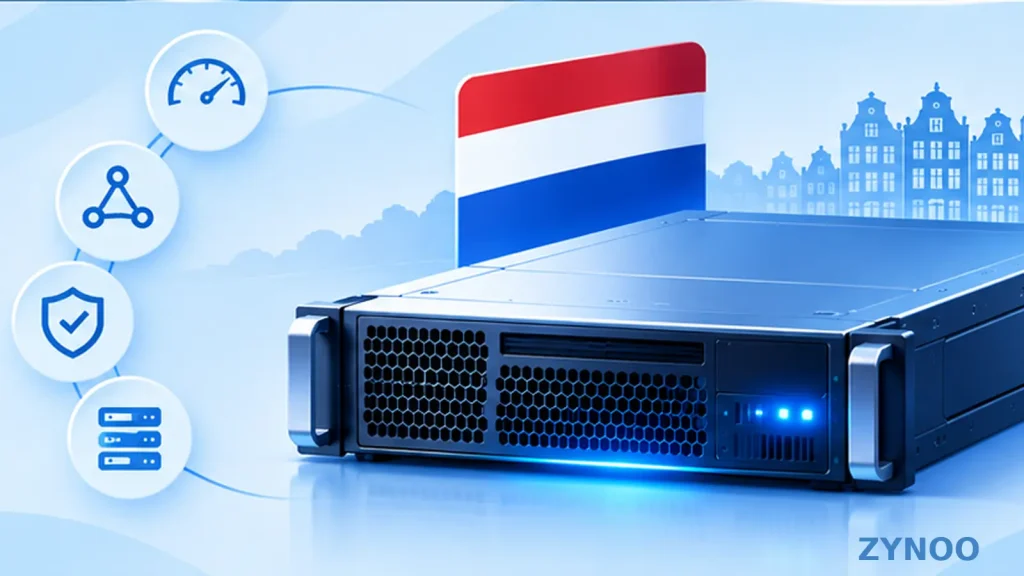
A Netherlands dedicated server is an excellent option for businesses that need dedicated hardware, reliable European connectivity, and control over where their infrastructure is hosted. With Amsterdam’s established network ecosystem and the Netherlands’ location in Western Europe, Dutch hosting is particularly attractive for websites, SaaS applications, databases, and other demanding workloads serving European users.
However, server location alone doesn’t guarantee better performance. Your hardware, network provider, and application configuration matter just as much.
Here are seven practical reasons to consider dedicated server hosting in the Netherlands.
1. Strong European Network Connectivity
The Netherlands is a major European connectivity hub, with Amsterdam playing a central role in international internet traffic.
One reason is the Amsterdam Internet Exchange (AMS-IX), which connects hundreds of networks, including internet service providers, cloud platforms, and content delivery networks.
These interconnections allow participating networks to exchange traffic more efficiently, potentially reducing unnecessary routing through distant locations.
For businesses serving customers across Europe, this connectivity ecosystem makes the Netherlands an attractive hosting location.
However, not every Dutch hosting provider connects directly to AMS-IX. Always evaluate the provider’s actual upstream networks, peering arrangements, and routing performance.
2. Good Latency Potential for European Users
Physical distance affects network latency. Hosting your application closer to its users can reduce round-trip times, improving responsiveness.
A server in Amsterdam can be a sensible choice for audiences spread across Western and Central Europe, particularly when your visitors are distributed across several countries rather than concentrated in one city.
Lower latency is especially useful for:
- Online stores processing customer interactions.
- SaaS platforms with frequent API requests.
- Multiplayer games and real-time services.
- Business applications with interactive dashboards.
Still, a Netherlands server isn’t automatically faster than a server in Germany, France, or another European country. Actual latency depends on routing, network congestion, and users’ locations.
Tip: Test ping times and traceroutes from your target markets before choosing a location.
3. Dedicated Hardware and Predictable Performance
Unlike shared hosting or a conventional VPS, a dedicated server reserves its physical CPU, RAM, and storage for a single customer.
This eliminates resource competition from unrelated tenants on the same machine and gives you greater freedom to configure the operating system, applications, and storage environment.
Dedicated hardware is particularly useful for resource-intensive databases, high-traffic applications, and virtualization.
You can also install supported virtualization software to run multiple virtual machines on one physical server.
4. EU Data Residency and GDPR Considerations
Hosting in the Netherlands allows businesses to store and process data within an EU member state.
This can help organizations with European data residency requirements or policies that favor EU-based infrastructure.
The Netherlands operates under the EU’s General Data Protection Regulation (GDPR), which establishes rules for processing personal data.
However, hosting in the Netherlands does not automatically make your business GDPR-compliant.
Your responsibilities may include:
- Establishing a lawful basis for processing personal data.
- Implementing appropriate security measures.
- Managing access to customer information.
- Reviewing contracts with data processors.
- Evaluating international data transfers, backups, and third-party services.
For businesses handling personal information, server location should be one part of a broader data protection strategy.
5. Control Over Your Hosting Environment
A dedicated server provides extensive control over your software environment.
Depending on the provider and hardware, you can select a compatible operating system, configure firewall rules, deploy containers, optimize databases, or install a virtualization platform.
This flexibility is valuable when applications require custom configurations that shared hosting cannot accommodate.
For example, a business might deploy Docker containers, run a private Git service, and maintain a dedicated PostgreSQL database on the same physical machine.
However, greater control also brings operational responsibility. Confirm which maintenance and security tasks are included in your hosting agreement.
6. Infrastructure Options for Demanding Workloads
The Netherlands has an established commercial data center market, giving businesses access to a variety of server configurations and connectivity options.
When selecting a dedicated server, consider the hardware requirements of your applications:
CPU: Higher clock speeds can benefit workloads sensitive to single-thread performance, while additional cores help with parallel processing.
RAM: Database caching, virtualization, and memory-intensive applications may require larger allocations.
Storage: NVMe SSDs can improve storage performance for databases and applications with demanding I/O requirements.
Network: Review port speeds, traffic allowances, upstream connectivity, and DDoS mitigation.
Hardware specifications alone don’t determine reliability. Examine the hosting provider’s support processes, backup options, and service commitments.
7. Predictable Costs for Long-Running Applications
Dedicated servers can offer attractive value when applications require substantial resources continuously.
Unlike usage-based cloud services, dedicated hosting commonly uses fixed monthly pricing for a defined hardware configuration and traffic allowance.
This makes infrastructure expenses easier to forecast.
However, the lowest advertised price isn’t necessarily the best deal. Compare:
- CPU generation and actual performance.
- RAM and usable storage capacity.
- Bandwidth limits and fair-use conditions.
- Setup fees, licensing, and backup costs.
- Hardware replacement procedures and support coverage.
A VPS or cloud instance may be more economical for smaller workloads or applications that need rapid, temporary scaling.
Who Should Use a Netherlands Dedicated Server?
Dutch dedicated hosting is particularly suitable for businesses with demanding applications and a substantial European audience.
E-commerce businesses: Large stores can benefit from dedicated resources for product databases, checkout processes, and background tasks.
SaaS providers: Dedicated infrastructure can support application servers, databases, and customer-facing APIs with predictable resource allocation.
Game hosting providers: Physical hardware can deliver consistent processing capacity, while the Netherlands’ location may serve European players effectively.
Development teams: A dedicated server can host build pipelines, containers, testing environments, or multiple virtual machines.
Businesses with data residency requirements: EU-hosted infrastructure can help support documented data location policies, subject to the full data processing arrangement.
How to Choose a Netherlands Dedicated Server Provider
Before purchasing, confirm these essential details:
- Data center location: Verify where the physical server and any associated backups are hosted.
- Network quality: Request test IPs or looking-glass tools and measure connectivity from your users’ regions.
- Hardware specifications: Evaluate CPU performance, memory, storage type, and upgrade options.
- Security: Review DDoS protection, remote access, and available network controls.
- Support and availability: Understand the SLA, response procedures, management scope, and backup responsibilities.
Also consider future growth. Adding another server may be straightforward, but upgrading physical hardware can involve downtime or migration.
Netherlands Dedicated Servers at ZYNOO
ZYNOO offers Netherlands dedicated servers hosted in Amsterdam, with dedicated hardware, Intel Xeon processor configurations, NVMe storage options, and network DDoS protection.
Customers can manage their infrastructure using remote management capabilities, including IPMI or iLO where supported, while ZYNOO provides 24/7 support.
Explore the available plans to compare processing power, memory, storage, and bandwidth before selecting a configuration that matches your workload.
Frequently Asked Questions
Yes, particularly for businesses serving European users. The Netherlands offers an established connectivity ecosystem, although performance depends on the provider’s network and your audience’s location.
Not automatically. Hosting within the EU can help with data residency requirements, but GDPR compliance depends on how your organization collects, processes, stores, and protects personal data.
A dedicated server offers exclusive physical resources and greater hardware control. A VPS typically costs less and may be more practical for smaller applications.
Yes. You can host multiple websites and applications on a dedicated server, provided the available resources and software configuration support them.
Conclusion
A Netherlands dedicated server can be a strong choice for businesses that need dedicated computing resources, control over their infrastructure, and connectivity to European markets.
The country’s network ecosystem is a meaningful advantage, but the best hosting decision still depends on actual latency, hardware, security, and support.
Compare these factors carefully to find a server that meets your application’s requirements and long-term budget.